What IoT Means: A Beginner’s Guide to the Internet of Things
Visual Guide: Understanding IoT Fundamentals and Real-World Applications
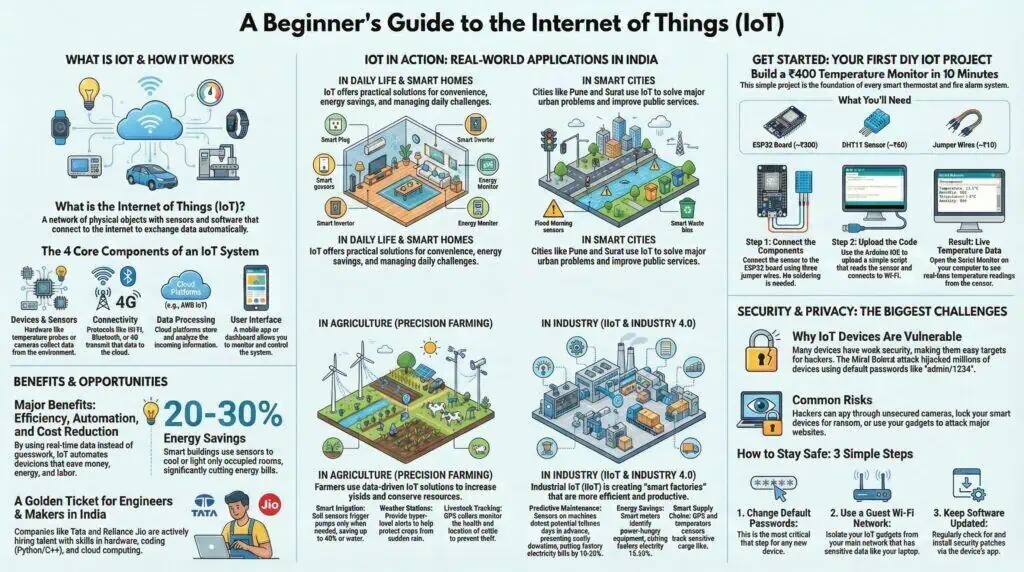
Download IoT Beginner’s Guide Infographic (High Resolution)
Video Overview: Your Guide to What IoT Means
introduction
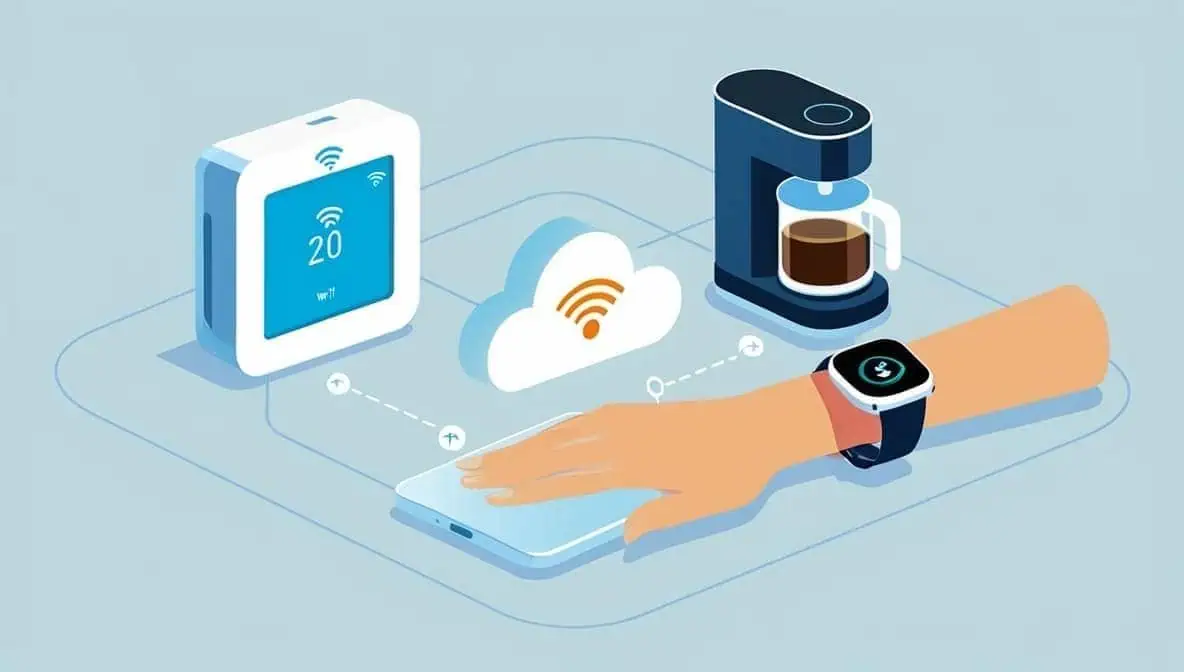
Imagine waking up to your coffee maker already brewing your morning cup, your AC adjusting temperature before you arrive home, or your phone alerting you when someone rings the doorbell—all happening automatically without you lifting a finger. This is what IoT means: the internet of things is a network of physical devices embedded with sensors and software that connect to the internet and exchange data with each other to make life smarter and simpler. From smart home devices like thermostats and security cameras to wearable fitness trackers and connected cars, IoT is quietly transforming how we live, work, and solve everyday problems.
How IoT Helps in Daily Indian Life (Power Cuts, Smart Home, Energy Saving)
IoT offers practical solutions for Indian daily life. Smart inverters manage power cuts efficiently, while energy monitors help control high electricity bills. Beyond the home, farmers utilize soil sensors to optimize irrigation during fluctuating weather. With affordable components available from local retailers like Robu.in, automation is becoming accessible well beyond the metros.

What IoT Means and How IoT Work
Simple Definition: Internet of Things Network
IoT connects physical objects—like appliances or machinery—using sensors and software to exchange data over the internet. Think of it as giving items a “digital voice” to communicate. Whether it’s a thermostat learning your habits or a factory machine predicting breakdowns, this ecosystem allows devices to analyze patterns and act automatically without constant human oversight.
How IoT Devices Communicate Without Human Intervention
The power of IoT lies in machine-to-machine (M2M) communication. Sensors first collect data—like temperature or motion—and transmit it via protocols such as Wi-Fi, Bluetooth, or LoRaWAN to the cloud. Software then analyzes this data to trigger automatic actions. For instance, a soil moisture sensor can open an irrigation valve, or a smart plug can alert you to high usage. This entire process happens without human input, delivering real-time efficiency and cost savings.
IoT Technologies: From Sensors to Cloud
A complete IoT system relies on four key layers working together. First, the Device Layer includes sensors and hardware—like temperature probes or GPS trackers—that collect real-world data. Second, the Connectivity Layer transmits this data using protocols like Wi-Fi, 4G, or LoRaWAN. Third, the Platform Layer (often cloud-based, like AWS IoT or Firebase) processes and stores this massive influx of information. Finally, the Application Layer presents it all on your dashboard or mobile app, letting you monitor conditions and control devices remotely.
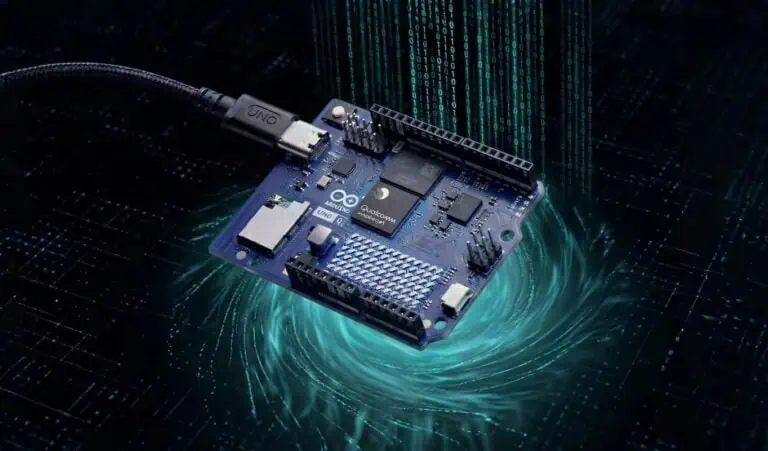
For Indian makers, affordable boards like the ESP32 or Arduino (often under ₹500) handle the device and connectivity needs, while free-tier cloud services manage the platform layer—making it possible to build powerful solutions on a tight budget.
Real-World Examples of IoT and IoT Application
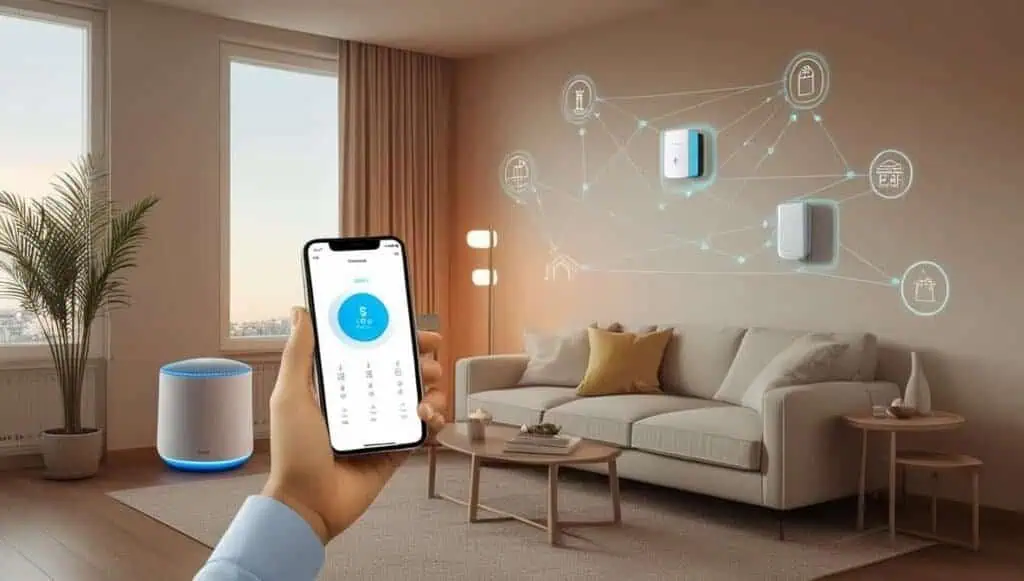
Examples of IoT Devices: Smart Home and Consumer Products
IoT isn’t futuristic—it’s already here. You likely use it daily:
- Smart Plugs (₹500): Turn your old geyser or AC into a smart device you can control from your phone.
- Wearables: Fitness bands (Mi Band) that track your heart rate and sync it to an app.
- Smart Bulbs: Lights like Philips Hue that change color or dim via voice command.
- Connected Appliances: Washing machines you can start from the office or fridges that alert you when the door is left open.
These devices make life convenient, but the real magic happens when you build one yourself.
Practical Value: Build Your First IoT Monitor in 10 Minutes
Stop reading and start building. Here is how to make a ₹400 Temperature Monitor that works exactly like a ₹5,000 smart thermostat.
What You Need (Buy from Robu.in or local shop):
- ESP32 Board: ~₹300 (The brain with built-in Wi-Fi)
- DHT11 Sensor: ~₹60 (Measures temperature/humidity)
- 3 Jumper Wires: ~₹10
Step 1: Connect It (No Soldering Needed)
- VCC (Sensor) → 3.3V (ESP32)
- GND (Sensor) → GND (ESP32)
- DATA (Sensor) → D4 (ESP32)
Step 2: Upload This Code (Arduino IDE)
#include <WiFi.h>
#include <DHT.h>

DHT dht(4, DHT11); // Sensor on Pin D4

void setup() {
  Serial.begin(115200);
  dht.begin();
  WiFi.begin("YourWiFiName", "YourPassword"); // Enter your WiFi details
}

void loop() {
  float temp = dht.readTemperature();
  Serial.print("Current Temp: ");
  Serial.print(temp);
  Serial.println("°C");

  if(temp > 30) Serial.println("⚠️ ALERT: It's getting hot!");

  delay(2000); // Check every 2 seconds
}
Result: Open the “Serial Monitor” on your computer, and you will see live temperature data. Breathe on the sensor, and watch the numbers jump! This simple logic is the foundation of every smart AC and fire alarm system.
IoT Application in Indian Smart Cities (Pune, Surat)
IoT solves big urban problems too:
- Smart Traffic: Pune uses sensors to adjust traffic lights in real-time, reducing waiting time at signals.
- Flood Warning: Surat has river sensors that send early alerts before floods hit, saving lives.
- Smart Streetlights: Lights that dim automatically when no one is around, saving huge electricity costs.
- Waste Management: Bins that tell garbage trucks when they are full, optimizing collection routes.
IoT in Agriculture: Precision Farming Solutions
Farmers are using IoT to save money and water:
- Smart Irrigation: Soil sensors tell pumps to turn on only when the ground is dry, saving 40% water.
- Weather Stations: Hyper-local weather alerts help farmers harvest before sudden rains spoil crops.
- Livestock Tracking: GPS collars prevent cattle theft and monitor health.
This is precision farming—using data, not guesswork, to grow more with less.
Industrial IoT and Industry 4.0 in India
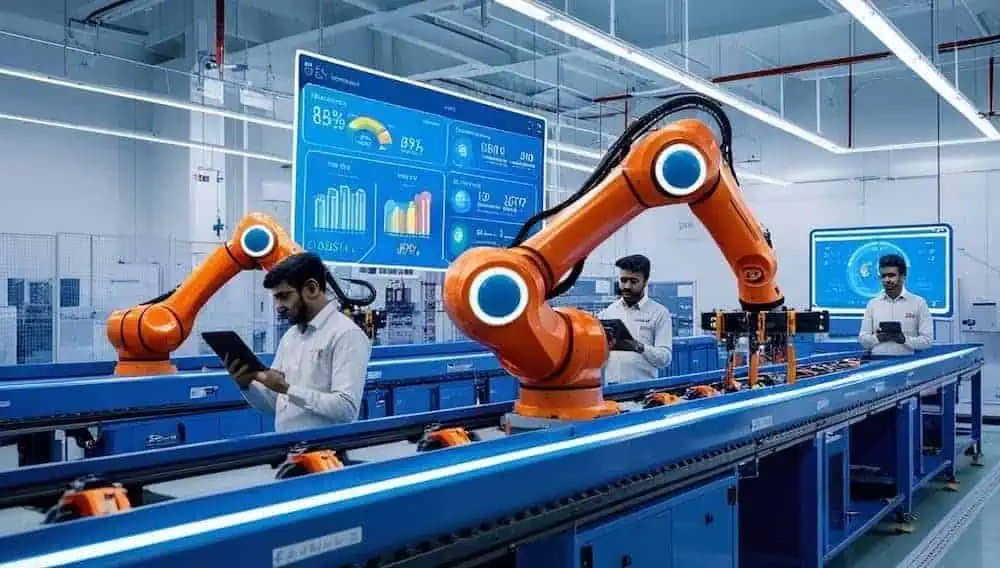
What Industrial IoT Means for Factories
Industrial IoT (IIoT) replaces manual checks in factories with real-time digital monitoring. In standard Indian factories, machine failures are often missed until they cause expensive stops. IIoT solves this by putting sensors on critical motors to track vibration and temperature 24/7. This data lets managers fix issues before a breakdown—a process called “predictive maintenance.” This drastically cuts downtime and eliminates error-prone paperwork.
- Predictive Maintenance: Sensors warn of failure 10 days early, preventing costly stops.
- Energy Saving: Smart meters find power-hungry machines, cutting bills by 15-20%.
- Digital Accuracy: Automated data replaces clipboards for 100% accurate records.
Industry 4.0 and Smart Manufacturing in India
“Industry 4.0” is the “smart factory” era, combining IIoT, automation, and data. Supported by Make in India, this is already active nationwide. Big players like Tata Motors use digitized lines where machines auto-optimize production. Small workshops in hubs like Ludhiana use low-cost IoT gateways to retrofit old machines, proving you don’t need a new factory to be smart.
- Tata Motors (Pune): Tracks millions of parts in real-time for zero-error assembly.
- Schneider Electric (Hyderabad): A “Lighthouse Factory” using IIoT for extreme efficiency.
- MSME Retrofitting: Small shops use ₹5,000 gateways to connect 20-year-old lathes.
Enterprise IoT and Smart Manufacturing in India
Enterprise IoT connects the whole supply chain, from raw materials to delivery. In India’s logistics, GPS and temperature sensors track sensitive cargo like vaccines, alerting drivers if conditions get unsafe. Retailers use smart shelves to auto-reorder stock, preventing lost sales. Smart grids balance power loads to prevent blackouts in industrial zones.
- Cold Chain: Real-time alerts protect vaccines and food on the road.
- Smart Warehousing: IoT robots in warehouses like Flipkart’s speed up sorting.
- Smart Grids: Utilities use meters to detect theft and load imbalances instantly.
Benefits of IoT: Why IoT Is Important
Efficiency, Automation, and Cost Reduction
Imagine if your home could lower your electricity bill on its own, or if a factory could fix itself before breaking down. That’s the real power of IoT: it turns “dumb” objects into intelligent money-savers. In manual systems, we waste huge amounts of electricity, water, and labor simply because we don’t have real-time data. IoT changes the game by automating decisions based on facts, not guesses.
- Smart Buildings: Sensors cool only occupied rooms, cutting energy bills by 20-30%.
- Supply Chain: GPS trackers alert if food trucks get too warm, preventing millions in wasted inventory.
- Agriculture: Soil sensors tell farmers exactly when to water, saving crucial groundwater.
Career Opportunities for Makers and Engineers in India
For students and makers in India, IoT isn’t just a subject; it’s a golden ticket to the future. The industry is hungry for talent, with giants like Tata, Reliance Jio, and countless startups actively hunting for engineers who can bridge the gap between physical hardware and the cloud. This is one of the few fields where electrical engineering meets coding (Python/C++) and cloud computing (AWS/Firebase). But you don’t have to wait for a job—IoT empowers you to be an entrepreneur today.
- Build Solutions: Create a low-cost water level controller for local apartments.
- Start Small: Make a smart energy meter for workshops using parts from Robu.in.
- Grow Fast: Solve real Indian problems with affordable tech and scale your business.
Challenges: IoT Security and Privacy
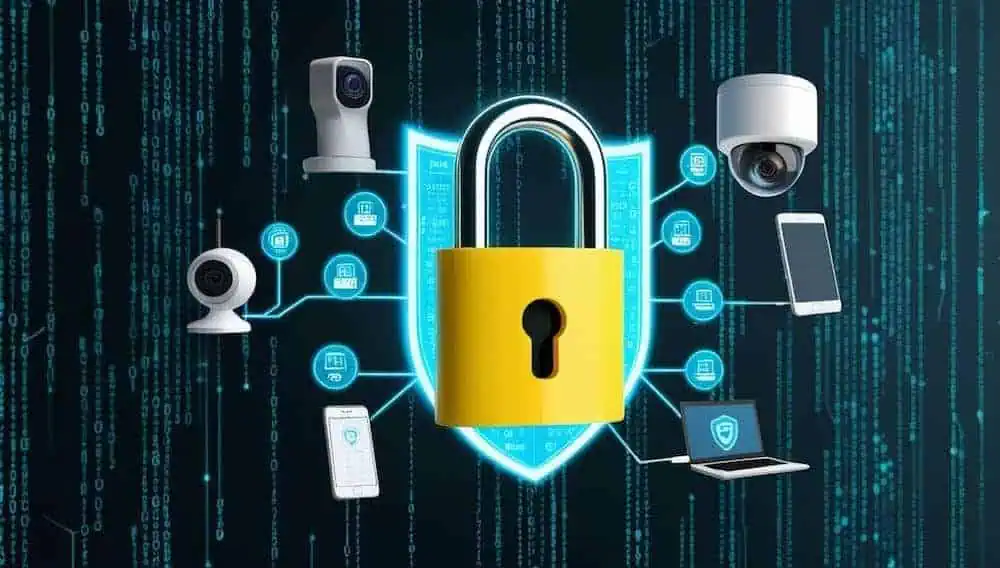
Why IoT Devices Are Vulnerable (Real-World Example)
IoT security risks are real and dangerous. The famous Mirai Botnet attack happened because hackers found millions of cheap cameras and routers still using default factory passwords like “admin/1234.” They hijacked these devices to crash major sites like Netflix and Twitter. For you, the risk is personal: hackers can spy through your unsecure camera or even lock your smart thermostat for ransom. These devices are easy targets because they often lack encryption and users rarely update them.
- Botnets: Hackers use your device to attack others.
- Spying: Unsecured cameras broadcast live video to strangers.
- Ransom: Attackers can lock smart locks until you pay.
Best Practices for Secure IoT Solutions
You don’t need to be an expert to stay safe; simple habits block most attacks. The most critical step is to change the default password immediately. If possible, use a “Guest Wi-Fi” network for your IoT gadgets. This isolates them, so even if a smart bulb is hacked, the attacker cannot reach your laptop or banking apps on the main network.
- Isolate: Use a “Guest Network” for IoT devices.
- Update: Check device apps monthly for security patches.
- 2FA: Enable two-factor authentication on camera apps.
Simple IoT Project Ideas for Beginners
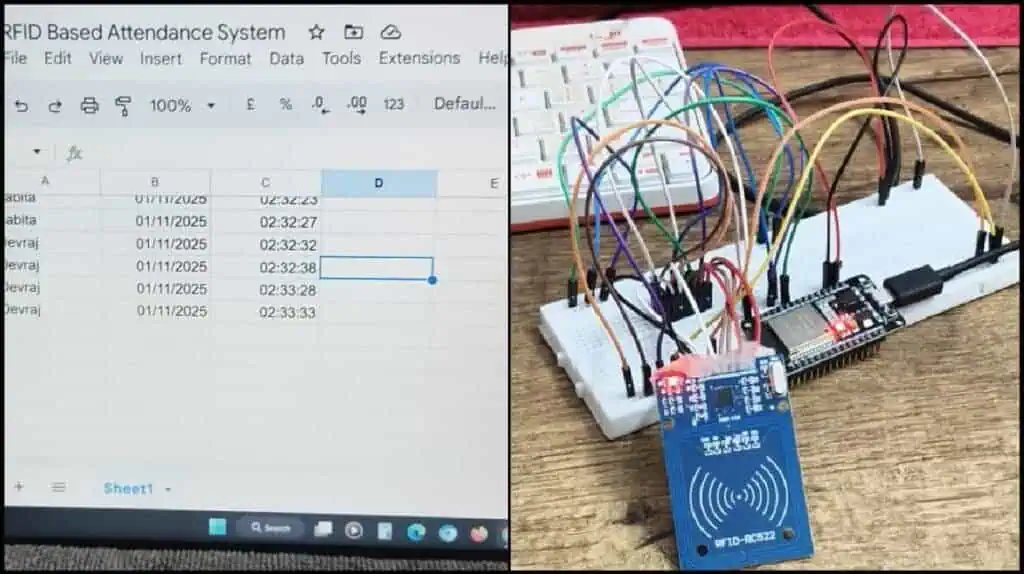
This project demonstrates how RFID technology integrates with IoT systems for automated tracking. If you want to build this yourself, check out our detailed tutorial on creating an RFID-based attendance system using ESP32 with complete circuit diagrams, code, and Google Sheets integration.
Smart Light Control Using IoT Devices and Sensors
The “Hello World” of IoT is controlling a light bulb from your phone. It teaches you the basics of connecting a physical relay to the internet. By using a simple Wi-Fi board like the ESP32 or NodeMCU, you can wire up a relay module to switch a lamp on or off via a mobile app. This simple project is the foundation for all smart home automation—from turning on your geyser before you reach home to scheduling porch lights while you’re on vacation.
- What You Need: ESP32 Board, Relay Module, Jumper Wires.
- Difficulty: Beginner (No soldering required).
- Value: Saves energy and adds convenience to any room.
Weather Monitor or Home Automation System
Once you master the basics, try building a personal weather station. Using a DHT11 sensor (which costs less than a cup of coffee), you can measure your room’s exact temperature and humidity. The real magic happens when you connect this to a free cloud dashboard like Blynk or ThingSpeak. You can set it to send an alert to your phone if your room gets too hot or too humid—perfect for monitoring a server room, a greenhouse, or even a baby’s nursery.
- What You Need: ESP32/Arduino, DHT11 Sensor, USB Cable.
- Difficulty: Easy (Plug-and-play coding).
- Value: Real-time data monitoring on your phone from anywhere.
Conclusion: Start Your IoT Journey
We have covered a lot: from defining “what IoT means” as a network of connected things to exploring how Industry 4.0 is reshaping factories. IoT is not just about smart bulbs; it is a massive shift in how the world operates, bringing efficiency to homes, cities, and industries alike. Whether it is a sensor saving water in a farm or a smart lock securing your home, IoT is solving real problems every day.
Getting started with IoT projects requires understanding the fundamental hardware components. Choosing the right microcontroller development board is crucial for beginners, as different boards offer varying capabilities for your projects. If you’re working with ESP32—one of the most popular choices for IoT—familiarize yourself with the ESP32 pinout and GPIO configuration to effectively connect sensors and modules for your builds.
Frequently Asked Questions
What is IoT in simple words?
In simple terms, IoT (Internet of Things) means connecting everyday physical objects—like a light bulb, a fridge, or a factory machine—to the internet. This allows them to send data (like “I am running out of milk”) or receive commands (like “Turn off the lights”) without you having to be there physically.
What are the 4 main components of IoT?
A complete IoT system consists of four key pillars:
– Sensors/Devices: To collect data (e.g., temperature).
– Connectivity: To send data to the cloud (e.g., Wi-Fi, Bluetooth).
– Data Processing: Software that analyzes the data.
– User Interface: An app or dashboard where you see the results.
Is a phone an IoT device?
Technically, no. While a smartphone has sensors and internet connectivity, it is considered a “controller” or gateway for IoT devices rather than an IoT device itself. However, it plays a crucial role in the ecosystem by allowing you to control your smart lights, locks, and cameras.
Can IoT sensors work without the Internet?
Yes! Some IoT systems can work locally without the internet (using protocols like Bluetooth or Zigbee) to control devices within a room. However, to control them remotely from another city or to analyze data in the cloud, an internet connection is required.
Is IoT the same as AI?
No, but they work together. IoT is the “body” that collects data (eyes and ears), while AI is the “brain” that analyzes that data to make decisions. For example, an IoT camera sees a person, but the AI recognizes who it is.